
Posted on July 17, 2026 in
Technology
July 16th was National AI Day – a celebration of the technology that is rapidly reshaping industries around the world. From healthcare and finance to manufacturing and education, artificial intelligence has become part of everyday life, helping people solve problems faster, uncover insights, and automate repetitive tasks that once consumed hours of work.
Few professions have experienced this transformation as visibly as digital marketing.
It’s easy to understand why some people are nervous. AI can generate blog articles, write social media captions, suggest advertising copy, create images, analyze customer behaviour, and even build entire marketing campaigns in a matter of minutes. Headlines warning that artificial intelligence will replace marketers have become increasingly common, raising an important question for students considering a career in the field.
Is digital marketing still a smart career choice?
The answer is yes – but perhaps not for the reason many people expect.
The discussion shouldn’t be about Digital Marketing versus AI. It should be about how skilled marketers are learning to work alongside AI to produce better results than either could achieve alone.
AI Is an Extraordinary Tool – Not an Automatic Solution

Artificial intelligence has changed the way marketers work, and there is little value in pretending otherwise. Many of the repetitive tasks that once occupied a significant portion of the workday can now be completed in a fraction of the time. Brainstorming ideas, organizing research, identifying keywords, summarizing reports, and drafting initial content have all become faster and more accessible thanks to AI-powered tools.
For businesses, that efficiency is valuable. For marketing professionals, it creates an opportunity to spend less time wrestling with routine tasks and more time focusing on strategy, creativity, and understanding the people they hope to reach.
That distinction is important because speed has never been the primary goal of marketing.
Effective marketing is about connecting with an audience. It requires understanding why people make decisions, what motivates them, and how to communicate in ways that feel genuine rather than manufactured. Those are challenges that cannot be solved simply by generating more words or producing content more quickly.
The Blank Page is No Longer the Challenge
One of the most significant changes AI has introduced is something few people talk about.
For decades, marketers often started with a blank page. Whether writing a blog article, developing an advertising campaign, or planning a social media strategy, the first challenge was creating something from nothing.
Today, AI can generate that first draft in seconds.
At first glance, this seems like it would reduce the need for skilled writers and marketers. In reality, it has simply shifted where the real value lies. The difficult part is no longer producing words.
The difficult part is recognizing whether those words are persuasive, accurate, engaging, and appropriate for the audience. An AI-generated article may be grammatically perfect while completely missing the emotional connection that encourages someone to take action. A social media post may sound polished but fail to capture a brand’s personality. An advertisement may check every marketing box while saying exactly the same thing as dozens of competing businesses.
In other words, AI has made judgment more valuable than ever.
Good Marketing Has Never Been About Saying the Same Thing
Imagine asking AI to write an advertisement for a local plumbing company.
The result would probably mention licensed technicians, dependable service, affordable pricing, customer satisfaction, and years of experience. None of those statements are wrong. In fact, they represent perfectly reasonable marketing.
The problem is that every other plumbing company is likely making those same claims.
Customers rarely remember businesses simply because they sound competent. They remember businesses that tell compelling stories, understand their audience, and communicate something distinctive about who they are and why they matter.
That has always been the role of a marketer.
Artificial intelligence is exceptionally good at identifying patterns based on existing information. Human marketers excel at recognizing when those patterns should be followed – and when they should be broken to create something memorable.
Creativity is More than Content Generation
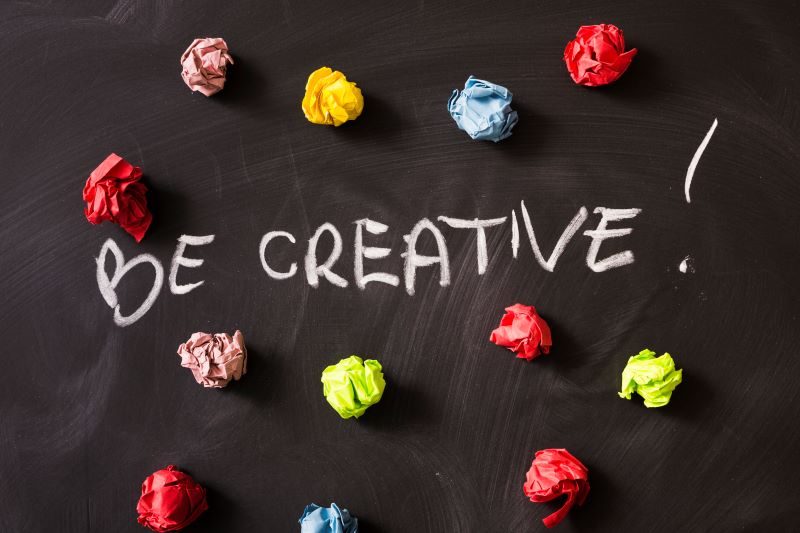
One of the biggest misconceptions surrounding AI is that creativity is simply the ability to produce something new. In reality, creativity is often less about generating an answer and more about understanding the question that needs to be asked.
Imagine two hungry people standing outside a restaurant when they encounter a genie offering to grant them a wish.
The first person immediately asks, “I wish for $30 so I can buy myself a good meal.”
The genie grants the wish. The person gets exactly what they asked for, enjoys dinner, and walks away satisfied.
The second person thinks more carefully. Instead of asking for a quick solution to today’s problem, they ask for something far more valuable: “I wish for a legally compliant, sustainably managed source of lifelong financial security, with diversified assets, proper tax planning, and enough liquidity to support my goals while protecting my future.”
The genie grants that wish as well.
Both people received exactly what they requested. The difference is that one person solved the immediate problem, while the other understood the bigger opportunity.
This is the difference between generating content and creating meaningful marketing.
AI is remarkably capable of producing information, ideas, and first drafts. It can help marketers explore possibilities faster than ever before. But the quality of the outcome still depends on the quality of the thinking behind the request.
A marketer who asks AI for “a social media post about our company” may receive something perfectly acceptable. A marketer who understands the audience, the brand’s goals, the customer’s challenges, and the desired emotional response can guide AI toward something far more effective.
The technology is powerful, but creativity begins before the first word is written. It begins with knowing what problem needs to be solved.
Authenticity Becomes More Valuable as AI Becomes More Common
There is another interesting consequence of widespread AI adoption.
As businesses produce more AI-assisted content, consumers are becoming increasingly familiar with its patterns. Generic articles, repetitive advertising language, and formulaic social media posts have become easier to recognize. While AI can create polished content remarkably quickly, audiences are also becoming more selective about what feels authentic and worth their attention.
That creates an unexpected opportunity.
Brands that invest in thoughtful storytelling, original perspectives, and genuine expertise are becoming easier to notice because they stand apart from the growing volume of interchangeable content online. Rather than reducing the importance of human creativity, AI may actually increase its value.
The marketers who succeed won’t be those who simply generate the most content. They’ll be the ones who create the content people actually remember.
The Future Belongs to Marketers Who Can Think Critically

Today’s employers are looking for more than someone who knows how to post on social media or write an advertisement. They need professionals who can evaluate information, solve problems, understand customer behaviour, interpret analytics, and adapt to new technologies as they emerge.
Increasingly, that includes knowing how to use AI responsibly.
The ability to write effective prompts, verify information, refine AI-generated content, maintain a consistent brand voice, and apply ethical judgment are quickly becoming valuable professional skills. These abilities don’t replace traditional marketing knowledge – they build upon it.
Learning digital marketing today means learning both the timeless principles of communication and the modern tools that make those principles more effective.
A Human Future for Digital Marketing
Artificial intelligence will continue to evolve. It will become faster, more capable, and more deeply integrated into the tools marketers use every day. That progress should be viewed as an opportunity rather than a threat. According to the Canadian Job Bank, the employment prospects over the next few years will be holding steady, the employment experts at Robert Half are even more optimistic.
History has shown that technology rarely eliminates professions built on creativity and critical thinking. Instead, it changes the tools those professionals use. Every major technological advancement has raised fears about the future of work. The printing press didn’t eliminate writers. Cameras didn’t eliminate artists. Spreadsheets didn’t eliminate accountants. Instead, each innovation changed what professionals spent their time doing, allowing them to focus less on repetitive tasks and more on the work that required human judgment and expertise. AI is simply the next chapter in that story.
The marketers who thrive over the next decade won’t be those who resist artificial intelligence, nor those who rely on it unquestioningly. They’ll be the professionals who understand where technology excels, where people excel, and how to combine the strengths of both. In an industry built on understanding human behaviour, that may be the most valuable skill of all.
Contact us to learn more about your potential future with a Digital Marketing Diploma.
Read more trending blogs.
About The Author

Content Editor & Writer, ABM College
As Content Editor at ABM College in Calgary, Alberta, Stephen plays a key role in advancing the college’s mission to provide relevant, high-quality training for today’s job market. He ensures all blog articles and web materials are accurate, clear, and genuinely useful for students, career changers, and industry professionals.
Stephen is also the author of a best-selling historical reference series documenting decades of computer and video gaming history — a body of work recognized by the Canadian Choice Awards.
Connect with Stephen on LinkedIn, explore his published works at Falcon Designs, or see his editorial expertise in action on the ABM College Blog.