
Posted on February 6, 2026 in
Health
When people hear “Safer Internet Day,” they often think about the obvious risks – phishing emails, hacked accounts, identity theft, weak passwords, and data breaches. And yes, those online safety threats still matter. They’re real, widespread, and increasingly sophisticated.
The modern internet is no longer just a technical space. It’s a psychological space, a social space, an economic space, and a political space. Today’s digital risks don’t just steal your data – they shape your beliefs, manipulate your emotions, influence your decisions, and distort your perception of reality.
Online safety in 2026 isn’t only about protecting devices. It’s about protecting people.
The Evolution of Digital Threats
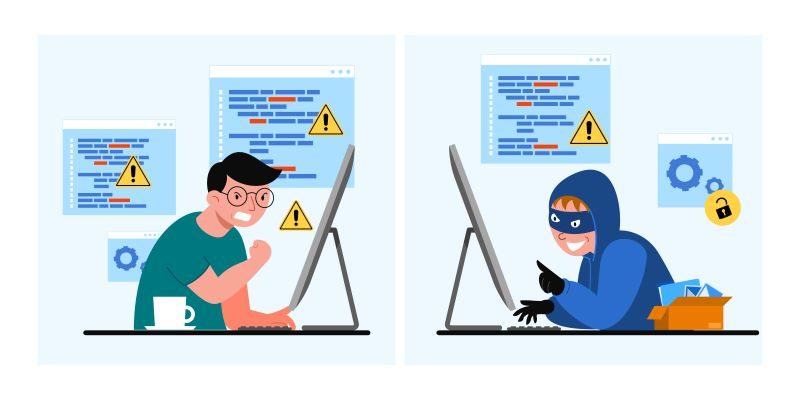
Traditional cybersecurity risks still exist:
- Phishing scams disguised as banks, schools, employers, or delivery companies
- Fake websites designed to harvest personal information
- Malware and ransomware attacks
- Data breaches exposing sensitive records
- Account takeovers through reused passwords and weak security practices
But these are now just one layer of a much larger ecosystem of risk. Modern threats increasingly target human psychology, not just systems. As such, there are new and more insidious threats to be wary of.
Social Engineering: When Trust Becomes the Vulnerability
Social engineering is manipulation, not hacking.
Instead of breaking into systems, attackers manipulate people into giving access willingly – through fear, urgency, authority, sympathy, or emotional pressure. Fake support messages. Impersonated coworkers. “Urgent” messages from fake managers. Emotional scams that exploit compassion and trust.
The danger isn’t technical skill – it’s human behavior. People are trained to trust interfaces, emails, logos, and digital authority. That trust is now being weaponized at scale.
AI Deepfakes and Synthetic Reality
AI has changed the meaning of “proof.”
Videos, voices, images, and faces can now be convincingly fabricated. Deepfake audio can mimic voices. AI-generated videos can create realistic scenes that never happened. Synthetic profiles can maintain entire fake online identities.
This doesn’t just enable scams – it erodes trust in evidence itself.
When people can no longer rely on what they see and hear, truth becomes negotiable. Verification becomes essential. Skepticism becomes a survival skill.
Misinformation as Infrastructure

Misinformation is no longer random – it’s systemic.
False narratives spread faster than facts because they are:
- More emotionally charged
- More sensational
- More divisive
- More engaging
- More algorithmically amplified
Algorithms don’t reward truth. They reward attention. Outrage spreads faster than empathy. Conflict travels farther than nuance. Simplistic narratives outperform complex reality. The result is a digital environment where distortion becomes normalized and emotional manipulation becomes profitable.
Weaponized Algorithms and the Attention Economy
Modern platforms are designed to maximize engagement, not well-being.
Algorithms learn what triggers users – fear, anger, validation, outrage, identity reinforcement – and feed it back to them in escalating cycles. Over time, users are nudged into narrower worldviews, stronger emotional reactions, and more extreme content.
This isn’t accidental, it’s structural. When attention equals revenue, emotional volatility becomes a very profitable business model.
The Emotional Cost of Constant Connectivity

A less visible but equally serious risk is psychological harm:
- Anxiety driven by information overload
- Doomscrolling and crisis fatigue
- Social comparison and identity pressure
- Digital burnout
- Emotional desensitization
- Reduced empathy through constant exposure to conflict
A safer internet isn’t just secure – it’s humane.
What “Safer Internet” Really Means Now
True digital safety means:
- Critical thinking instead of blind trust
- Verification instead of assumption
- Digital literacy instead of digital dependency
- Ethical design instead of attention extraction
- Human-centred technology instead of profit-driven manipulation
- Emotional intelligence alongside technical awareness
Safety isn’t just about protection – it’s about resilience.
How Can You Navigate the Modern Internet More Safely?

Practical safety today looks like:
- Questioning urgency-based messages
- Verifying sources before sharing content
- Recognizing emotional manipulation patterns
- Pausing before reacting to outrage-driven posts
- Using multi-factor authentication
- Limiting data exposure
- Understanding how algorithms shape what you see
- Separating identity from online validation
Digital safety is no longer passive. It requires active awareness.
Safer Internet Day is About Culture, Not Just Code
The future of online safety isn’t just stronger firewalls and better encryption – it’s better education, better systems, better ethics, and better awareness.
It’s about building a digital world where:
- Technology serves people
- Information empowers instead of manipulates
- Platforms protect instead of exploit
- Systems support trust instead of eroding it
A safer internet isn’t created by software alone – far from it, in fact. It’s created by informed users, responsible design, ethical leadership, and digital literacy.
In 2026, the biggest vulnerability of our permanently online culture is no longer the device… It’s the human mind.
Contact us to learn more.
Read more trending blogs.
About The Author

Content Editor & Writer, ABM College
As Content Editor at ABM College in Calgary, Alberta, Stephen plays a key role in advancing the college’s mission to provide relevant, high-quality training for today’s job market. He ensures all blog articles and web materials are accurate, clear, and genuinely useful for students, career changers, and industry professionals.
Stephen is also the author of a best-selling historical reference series documenting decades of computer and video gaming history — a body of work recognized by the Canadian Choice Awards.
Connect with Stephen on LinkedIn, explore his published works at Falcon Designs, or see his editorial expertise in action on the ABM College Blog.